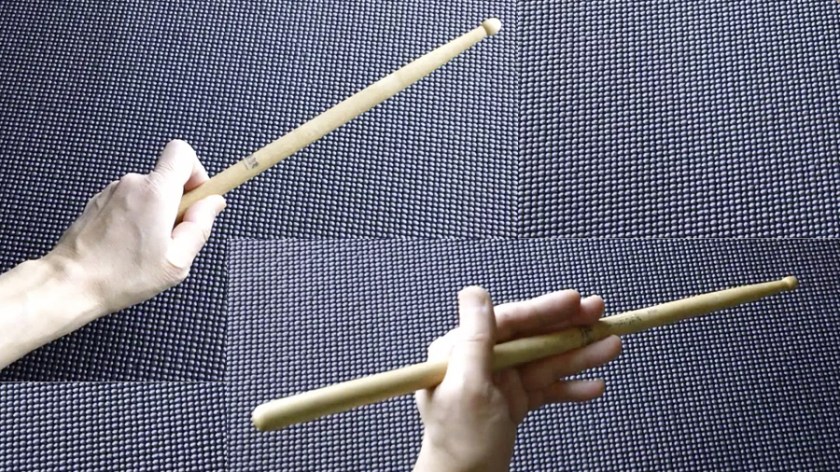
What I HATE about the Marching Percussion Community:

By Karl

In the Marching percussion activity, there is an unspoken rule that says it is perfectly fine to critique someone’s drumming video online even if they didn’t ask to be critiqued.  Whether the drummer in the video is a beginner, a novice, an instructor or a highly experienced professional, you’ll often find such comments as “your heights are too high,” “you need to turn your wrists more,” “you are rushing the 2nd bar,” etc.  My question is: WHEN and WHY was this ever made to be OK???


In the real world, a non-drumming equivalent to this situation is if you were to walk down the street and some fashion student were to tell you that your outfit doesn’t match.  Is this behavior acceptable in our society from our friends or even people we know, let alone complete strangers? Would it make it more acceptable even if they were qualified?  Of course not!  I know…I know…honest feedback and critique, even if it is negative, is absolutely essential for our growth; I get that.  But what if you did not ask for the critique? What if the crique you received was completely unsolicited?
unnamed-1.jpg


Even if I personally don’t think this is ok, I think in some ways, unsolicited critique is ultimately filled with the good intentions of the activity.  After all, the activity forces us to be good at looking for flaws in our own playing and the playing of our peers because it is one of the few things we depend on to improve our ensembles.  I also think that overall, the need to critique ourselves and others is born out of the desire to help each other out so that other members in the group can get better.  Also, we allow this critique because, well, quite frankly, the activity is mostly filled with really good people who don’t want to offend anyone by telling them their critique is somewhat unwanted.  But outside of this, I think the motivation of unsolicited critique is not as pure.


I think that when we give unsolicited critique, it is a way for us to boost our own ego knowing that our approach to drumming is superior to someone else’s and validates our technique by devaluing someone else’s.  You may think that you are helping that other person out, but when that person literally did not ask for your opinion or feedback, are you truly doing it for that person or are you doing it for yourself?


Of course, I’m not saying we shouldn’t critique each other at all, as that would be utterly ridiculous.  Nor am I saying that this blog is a license for everyone to be mediocre.  What I’m saying is, whenever possible, put your work out there and make a formal invitation for people to critique your playing to help you see things that you might not be seeing.  It is often times very difficult to see outside of ourselves, which can hinder our growth but an outside perspective can help us with our “blind spots.”  On the other hand (and I am calling for this RIGHT NOW to be the new standard in our activity that I am going to highly campaign for), if you see a drumming video please DO NOT CRITIQUE the video unless the person in the video specifically ask for your critique! If you can sit there and appreciate a pure expression of art, then by all means leave a nice compliment.  But if you have something negative to say, even if it is constructive criticism, refrain from doing so, because quite frankly… nobody asked you!  I think this is just good etiquette and good practice of self awareness to know what is and what isn’t socially acceptable.


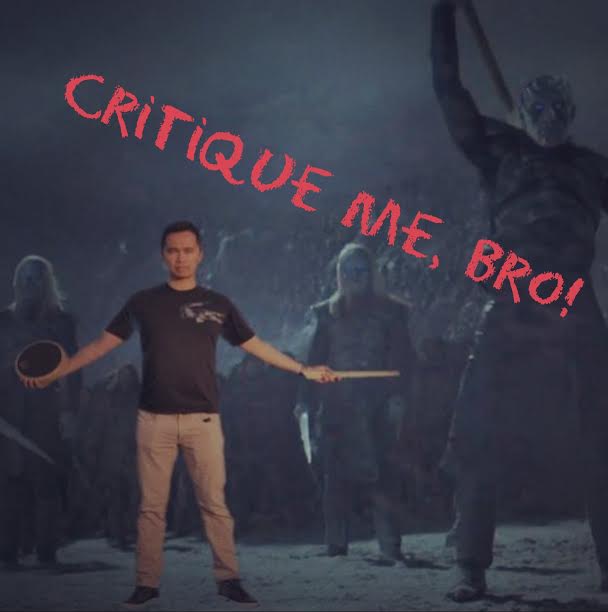
Overall, I hope you enjoyed this blog and the ideas within have gotten you to re-evaluate some of the current socially acceptable norms of our activity.  And if you think I am only saying this because I am afraid of critique, well, I can prove that is not the case at all…


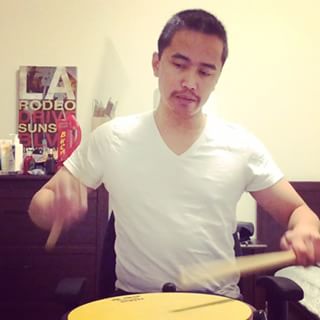
https://www.instagram.com/p/BGx8CgbTh19/?taken-by=karldrumtech


So either way, anytime you get critique (whether solicited or unsolicited), take it for what it’s worth, don’t get offended and use that feedback to get better!  You might as well use the critique to improve your drumming skills even if we can’t stop the practice of unsolicited critique right away.  But if you agree with me and want to help END unsolicited critique for the benefit of the entire activity, make sure you share this blog!!!

Have you ever given or received unsolicited critique?  What do you believe are the pros and cons of this practice?  We would love to hear your thoughts!

7 Great Drumline Jokes

791398ac69a20018d70255082af419d6.jpg

How do you hide something from a drummer?

Put it in a piece of sheet music.

How can you tell there’s a cymbal player at your door?

They don’t know when to come in.

What did the drummer get on his IQ test?

Drool.

Did you hear about the bass drummer with the really fast hands?

Me either.

What’s the difference between a high school bass line and shoes in a dryer?

Nothing.

How do you get a snare drummer to play an accelerando?

Ask them to play at a steady tempo.

How many drummers does it take to screw in a light bulb?

None, they’ll just make the pit do it.


Ego of a Drum Tech

by Karl
What happens when a drum tech allows his/her playing to be critiqued?
 

So as an experiment, I posted a drumming video and I gave everyone permission to critique my playing for their own benefit.  Of course, as expected, I got a ton of critique.  After all, even though I am a teacher, my playing is by no means perfect.  But without a doubt, it hurt me.  It hurt a lot!  But thankfully, what I was able to do was quickly realize that I wasn’t the one getting hurt; it was my ego.  Once I let go of my ego, it didn’t hurt anymore.  My sense of self worth as an instructor remained intact and I came to the realization that while I am not perfect, it doesn’t mean that I can’t teach!  Here are some of the things I did to let go of my ego and respond to each person who gave me very constructive criticism:

10723921_729962880436562_2144897707_n.jpg

  • I waited for a week to respond.  Although I didn’t do this consciously, I waited for my emotions to come down before I responded.  After all, the immediate and visceral responses I had in my head were defensive, dismissive and at the very least, cheeky.  Waiting for emotions to subside helped me to be open to critique from a purely technical standpoint.

  • I considered every perspective each person had to offer, no matter what their age or experience level.  I respectfully gave reasons for why I questioned some things I didn’t totally agree with but for the most part, I really considered what they had to say.  With the absence of my ego, I actually ended up agreeing with most people’s assessments of my playing.

  • I stepped outside of myself and watched my video again, not as myself, but just as if it was some other person.  So if that wasn’t me, I would normally just try to give that person my best observation and give them my best assessment for their benefit.  This also helped me to see things from other people’s point of view and not just how I saw myself.


All in all, I think this was a good experience and this really helped me to get rid of my ego. Maybe this chips away at the armor of @karldrumtech.  Maybe some students will see @karldrumtech as someone who is no longer worthy of being considered a teacher and shouldn’t be followed.  Both of these are fine.  We’re all on a path and we can all help each other, no matter what point we are in the journey.  Finally, let me just close with “you are never as bad as they say you are and you are never as good as they say you are.”


Hope you enjoyed this blog.  Here’s the link if you want to see the video in question: https://www.instagram.com/p/BGx8CgbTh19/?taken-by=karldrumtech.  Are there other ways you can see how ego can hurt your own progress?  Have you ever received critique online before and how did you respond in those instances?  I would love to hear your thoughts!

Inside The Line: Pulse Percussion

by J.D.

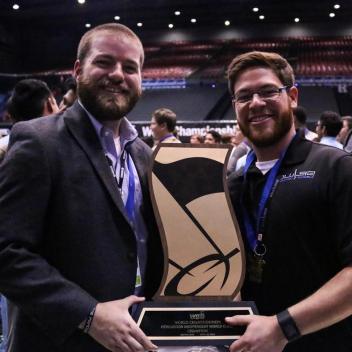
“Brother,” that was the name given to Pulse Percussion Ensemble’s 2016 championship-winning performance, but it also exemplifies the spirit of unity that was captured throughout the season by this tireless ensemble and its staff. Though Pulse’s design team drew inspiration from a hip hop dance group for this year’s show, ensemble director, Mark Kveton, said that they knew this was the theme they would work with because the design team wanted to convey something very real. They wanted to portray its messages, situations, and feelings; at the forefront being a spirit of brotherhood. As Drumlines Of America talked with Kveton, that spirit was clearly expressed throughout the entire interview, as the ensemble seemed to harness it so well, on and off the floor.

13015298_1170359946321920_5393651192232730395_n.jpg
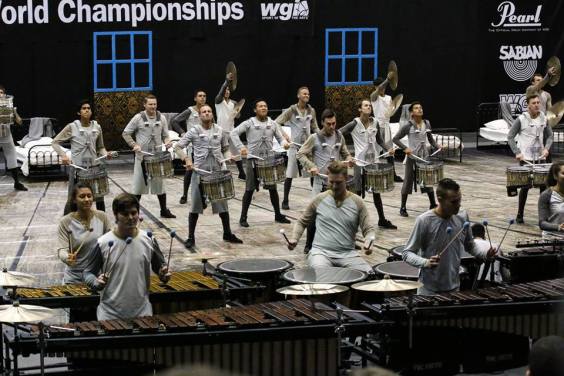
Pulse Percussion performs “Brother” at WGI Finals

Kveton, who typically handles any ensemble needs outside of design or instruction, talked about what it felt like to walk into a Pulse rehearsal this season, “It was egoless. No one came in saying ‘I’m going to carry this group all by myself.’ They were a family from start to finish…” These brotherly ideals, coupled with a design staff that was able to put out a sophisticated & entertaining product, and an admin team that fired on all cylinders the entire season; this is what Kveton attributed the groups overall success to. Each extension of the ensemble giving all they have to one another, like a family, like brothers.   Even Kveton said he has never worked with an ensemble that was able to do what Pulse did this season. They are truly an example to ensembles all across the country.

11219632_1167409806616934_4491302489083088399_n.jpg
Pulse in rehearsal

Southern California houses 5 of WGI’s world class finalists, with all eyes now on Pulse. This makes setting the example that much more important, especially with their little brother ensemble, POW Percussion, competing in world class as well. Kveton says that the Pulse organization is also extremely proud of what POW has accomplished and that both ensembles seem to breathe that undying brotherly support for one another. It’s this type of support that helps each player or team member through the challenges of the season.

When asked about the most challenging part of this season, Kveton pointed to the growing implementation of props within the overall activity. Pulse utilized 43 performers and 75 individual props this year, big and small. Not only did performing with these props create a new layer beyond the drill & music that needed to be taught/performed, but it was quite a task just keeping track of it all. Each person had a hand in keeping it all together, and so seemed to be the premise for the overall season.

12993450_10153537039757944_1672107747672048593_n.jpg
Directors, Mark Kveton & Chris Henderson

Giving your all to the player/teammate next to you, in search of a greater success, made the spoils of the season that much more rewarding for everyone at Pulse. “Pride,” is the sheer feeling Kveton describes as the 2016 championship announcement was handed down, “All 43 members of the ensemble took the floor every day and performed their hearts out. I truly believe they left everything on the floor at WGI World Championship Finals. You could see it on all of their faces, the look of absolute drive and resilience… The championship title was just icing on the cake. “ The ‘cake’ Kveton speaks of must have been a recipe made up of determination, endurance, and unity; all baked with a brotherly love. One thing is for sure; it’s a taste that the team at Pulse Percussion won’t soon forget.

Pulse Director, Mark Kveton, would like fans of Pulse to know how much the group appreciates them and says that they do this to inspire you all. Drumlines Of America would like to send a special thank you to Pulse Percussion and Mark Kveton for such an awesome interview.

Chavez Bass Pad

by Alissa

ahcbdp-400.png

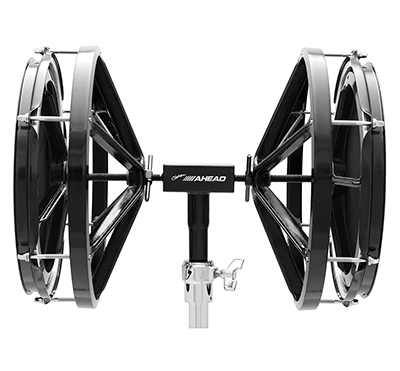
Alright guys, this one goes out to my fellow bass drummers/future basses. I just recently received a bass pad that has completely changed everything. Originally, the only bass pad on the market was a double sided piece of metal with rubber on it. I can’t complain because it served its purpose, but come on, we deserve something a little bit more. Don’t you think? Well, the time has come and our prayers have been answered. There is a new bass pad out and it has a lot to offer. The Ahead Chavez Marching Bass Pad is a double sided, mesh headed, and tunable (yes, I said tunable) piece of heaven.

Okay, now let me rewind a little and explain more. The features this pad includes are life changing when it comes to practicing bass drum. The mesh heads allow the drummer to see exactly where they are playing and the heads have a center patch so you can hear if you are hitting the center or the outer edge. These heads also provide a more realistic feel compared to pads in the past. Did I mention that you can remove the mesh heads and replace them with actual drum heads? Just another amazing feature that is included with this pad. Now for my personal favorite, the most valuable character trait in my opinion, the pads ability to be tuned. By simply rotating the playing surfaces you can recreate the feel of any bass between 18″ and 32″. So no matter what bass you play, this pad gives you the ability to practice without having to bring your drum home. This product is something that I strongly recommend investing in if you want to continue developing your bass technique and playing ability.

5 things you need for rehearsal

by JD

Here is a list of 5 items every marching drummer should have with them during a group rehearsal:

  1.  Printed music/dot sheets and a pencil.  Often directors and instructors will ask us to  make small adjustments to music or routines during rehearsal.  It is always best to physically mark these things down on printed music/dot sheets, so that every time we return to the sheets for a review, we are reminded of these changes.  Even in this digital age, there is still no substitute for good ole pencil and paper!  It can also be very annoying when a player who isn’t familiar enough with the music doesn’t even have a copy to look at in rehearsal, don’t be THAT guy!Products33476-1200x1200-1207825.jpg
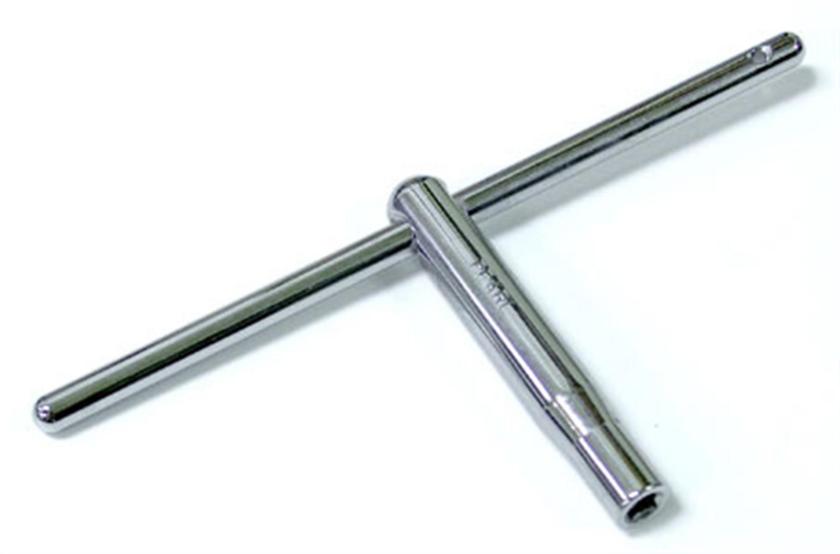
  2. A drum key.  Just as the band/corps tunes and adjusts their sound, so should we.  Drummers often push tuning aside and disregard because it can become a large chore at times.  But if you keep a drum key with you all the time and make small adjustments as you go, you can save your line the trouble of those huge tuning sessions that sometimes take hours.  High tension is best for marching.  Put it in your pocket or attach it to you stick bag, you’ll be happy that you did.
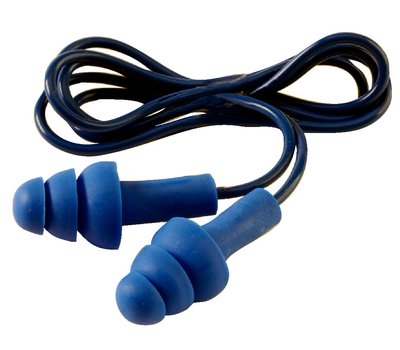
  3. Ear plugs.  Anyone spending lots of time around drumlines or large and powerful music ensembles should invest in earplugs.  They protect your ear drums from unnecessary wear & tear and create slimmer odds that you will need a hearing aid later in life.  You can order plugs that reduce volume, but don’t cut frequency from Etymotic.  Regular ear plugs are also good when you want to cut certain frequencies.  The moments during rehearsal when the resonance becomes a bit too much to listen to and you just want to focus on rhythms, good old fashioned foam ear plugs will do the trick.  You can purchase a pack to last you all season for around $5 at any chain drug store.  TR-01-000_B_P.jpg
  4. Water.  Even inside and out of the sun, we tend to run our bodies ragged at times.  Being that you are made up mostly of water, it is the best thing for you.  Common problems found during band rehearsals; heat exhaustion, nausea, asthma, dehydration, and general fatigue.  Symptoms of all these conditions can be eased by simply drinking water.  Having a bottle waiting on the sideline won’t  hurt.
  5. A positive attitude.  There is nothing more frustrating to fellow students or instructors than a kid with a consistently terrible attitude.  They come in many forms; the complainer, the know-it-all, the jokester that always goes too far.  All of these kids hinder the learning experience for others, which is really bad considering that you are all there to learn.  When going into rehearsal, tell yourself these  few simple tings, “I am here to learn and get better.  Rehearsal is not the time or place to voice my personal opinions and comments.  I will show others the respect I wish to have.”  If everyone can remember these, your rehearsal will go much smoother.

So the next time you are getting ready for a group rehearsal, check this list and make sure you are prepared.  A prepared student is a successful student!  Expect nothing less than success for yourself.

Traditional vs. Matched

by Karl
The Age old question: Traditional Grip vs. Matched Grip. Which is better?

I’m sure this has been debated and explored countless times by Marching Percussionists and Drumset Drummers alike.  But for the sake of giving the Marching Percussion activity something of value, let’s keep it within the Marching arts and not debate on how traditional grip can be useful for Jazz drummers on Drum Kit.  I also want to give the Marching Percussion activity value by exploring this topic with a unique perspective; my own 😉

1004The funny thing is, I am a quadplayer and I have pretty much only used matched grip exclusively throughout my entire Percussion career.  But when I became a High School Percussion Caption head, I taught my Snare Drummers to use (you guessed it) traditional grip! LOL! So why did a lifetime matched grip user and Quadplayer like myself, teach my Snareline how to use Traditional grip?

But, don’t you have more power using matched grip?  Isn’t it more practical when transitioning between all the instruments (with the exception of Cymbals) in the drumline since everyone utilizes pretty much the same grip?  The days of the sling drums are over, so why do we still employ this grip when modern harnesses pretty much eliminate this need?  What about some of those Vanguard and Darthmouth HS Snarelines that have shown how to break tradition and standards by using matched grip? Plus…I’m a FREAKIN’ QUAD DRUMMER!


Well, I think it comes down to this: Being superficial and following the industry standard.  LOL


I mean, traditional grip does look good and it creates a kind of visual variety that sets it apart from every other section in the Ensemble.  And yeah; everyone does it!

I really think it just comes down to one simple answer: choice.  We all have a choice on what grip we want to use and it’s simply a matter of preference. Besides, you obviously can still do most, if not all the things you can do with matched grip.  Who are we to judge each other on our choices and what grip we want to use, what Car we want to drive or what clothes we want to wear?  I think the most important thing in deciding which grip works best for you is; use the grip as efficiently as you possibly can and execute it to the best of your ability.